
- Follow us:
- Our Commodities:
-


September 2026
This year’s twelve finalists represent nearly 2 390 ha of land across six provinces, reflect the progress farmers are making as they build stronger farming businesses and move towards commercial grain production. While every farm has its own story, the visits revealed a common theme: Farmers are improving their production, expanding their operations and strengthening their businesses.
The adjudication process took judges to farms across Limpopo, Mpumalanga, KwaZulu-Natal, the Eastern Cape, the Free State and North West. After the judges had tallied the scores, the following farmers were selected as the top achievers in their various categories for 2026:
NEW ERA COMMERCIAL FARMERS (MORE THAN 250 TONS)
 Masenga Farming, near Kokstad in KwaZulu-Natal, is a mixed farming operation of the Mbutho brothers, Siviwe (left) and Luvo, who took over their father, Luvuyo’s, farming operation. On their farm, Alton, maize is produced and they also rear cattle and sheep. According to Siviwe, who manages the crops and finances, one must never stop learning in agriculture. He is grateful to PGP for arranging workshops and information days, where farmers can expand their knowledge. This farming business continues to build on the foundation established by the Mbutho family and has shown steady growth across its different enterprises. Siviwe has been a member of Grain SA’s FDP since 2020.
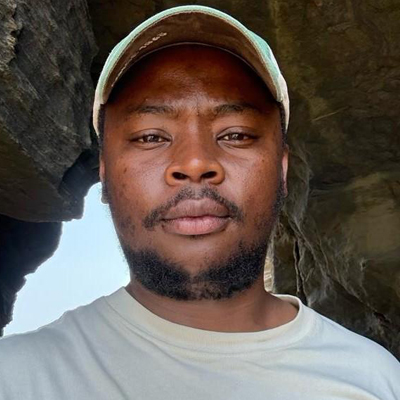 Although Motlalepule Masiu (27) originally looked at a career in banking and accounting, his father
encouraged him to engage with the family farm. He completed postgraduate studies in agricultural
management at the Central University of Technology before returning to the farm full-time. “I love being out in the fields and driving tractors. Farming is where I belong,” he says. He now farms with his family at Driekoppen near Senekal in the Free State. This farming operation (Masiu Farming Enterprise) produces maize, soybeans and sunflower, and also includes a Bonsmara herd. After starting on a smaller scale, the family recently acquired a 700 ha farm. Masiu has been a member of the FDP since 2020.
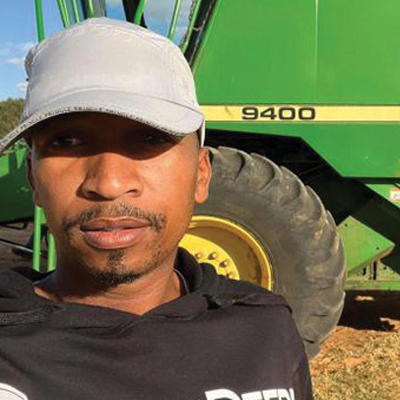 Obakeng Mogogane (37) farms at Weltevrede Village near Mahikeng in North West, where he is producing maize, sunflower and beans on communal land. Since joining the programme in 2022, he has expanded his operation, invested in larger machinery and strengthened his workforce. His farming business employs 14 permanent workers and provides additional seasonal work during planting and harvesting. His interest in agriculture was developed from a young age through hands-on involvement in farming activities. Over time, this interest evolved into a clear vision of building a sustainable agribusiness. He has steadily expanded his business and has recently implemented various systems – a security system, labour structure, recordkeeping and mechanisation.
POTENTIAL NEW ERA FARMERS (51 ha to 249 tons)
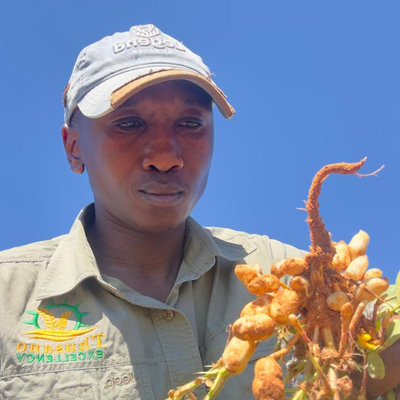 Kopano Lentswetshipi who is 37, began farming alongside his father at Weltevrede Village near Mahikeng. In 2014, his father gave him 45 ha to cultivate, and since then he has expanded to 200 ha and established Thusano Excellency. He has also invested in machinery and strengthened the administrative side of his business. Kopano began his farming journey at a young age under his father’s guidance. Today this father-and-son team is trying to equip themselves with all the knowledge they need to grow their farming business.
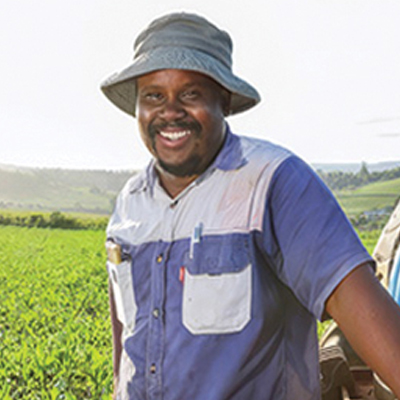 Thembakuye Jeff Hlela (37) farms near Ixopo in KwaZulu-Natal, where he produces maize and soybeans through Hangala Farming. He also grows a variety of organic vegetables and herbs for household use. As an agricultural management graduate, he worked in several areas of commercial agriculture, returning “to his roots”. His interest in farming was sparked by his grandparents, who were subsistence farmers. Despite crop losses caused by hail, wind and livestock damage, he remains committed to expanding his operation and securing land of his own.
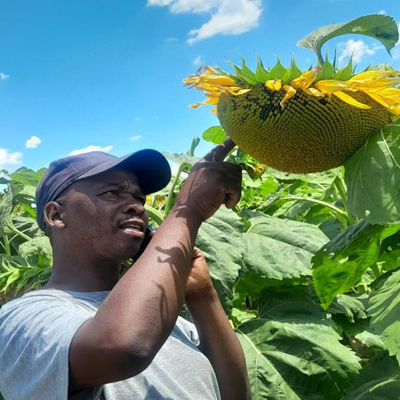 Vincent Ntuli (45) farms at Springbokpan in North West. After his father’s death in 2015, he repaired the family’s old machinery and planted his first 15 ha, using income from his mining job. He now cultivates more than 100 ha, creates employment and leases land from members of the local community. Vincent joined the Itsoseng Study Group in 2015 and has been part of the FDP programme ever since. While he is still growing his business and expanding his fleet with proper tractors and equipment, he dreams of owning his own farm.
SMALLHOLDER FARMERS (11 ha to 50 ha)
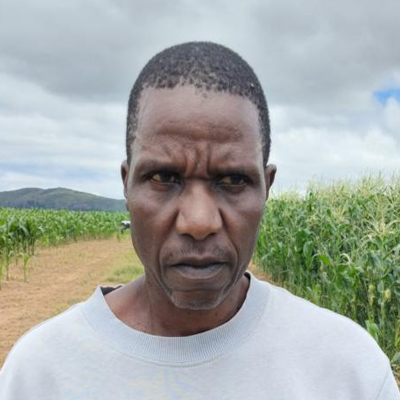 Lubabalo Jordan (53) is another farmer who was inspired by his father to take up farming. After working in engineering in South Africa and Ireland, he returned to the agricultural roots his father established. He now farms near Mthatha in the Eastern Cape. Since joining Grain SA three years ago, he has expanded his maize production from 3 ha to 13 ha. He is the chairperson of the Bangilizwe Study Group.
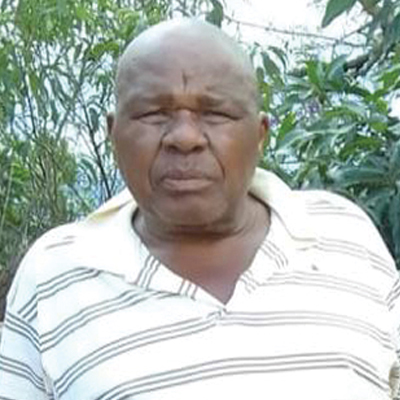 The oldest finalist in the 2026 competition is Mfaniseni Mnculwane, who is 78. Mfaniseni began producing maize and broiler chickens near Estcourt in KwaZulu-Natal after returning home from Gauteng in 2002, where he worked in construction. As a Grain SA member since 2011, he finances his own inputs and mechanisation. In his free time, he assists newer study group members with chemical weed control to ensure that they can attain better yields.
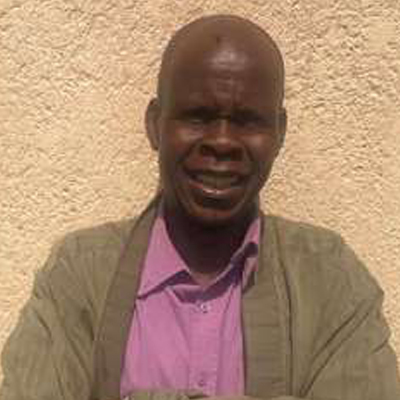 Having grown up in poverty, farmer Stuurman Motau (64) learned that farming was his path to self-sufficiency and family security. He farms with maize and beans near Groblersdal in Limpopo, while also running a substantial livestock operation. Since joining Grain SA in 2019, he has improved his grain yield from less than 1 t/ha to between 4 t/ha and 6 t/ha. He also assists neighbouring farmers with land preparation and planting. As a dedicated participant in the study group workshops and training, he is now aiming for a 6 t/ha to 7 t/ha yield.
SUBSISTENCE FARMERS (less than 10 ha)
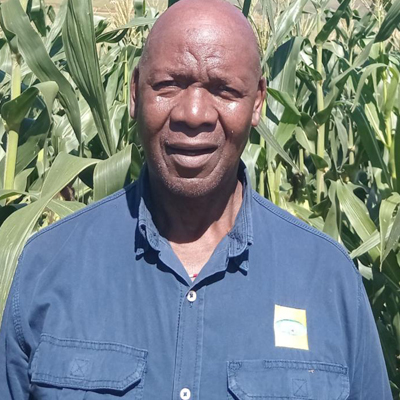 Hombile Nombebe (72) farms in the Eastern Cape and joined Grain SA in 2019. Since then, his farming operation has expanded from 0,5 ha to at least 1 ha. His steady progress and consistently good crops are a result of his training in maize and dry bean production, together with careful planting and weed control.
M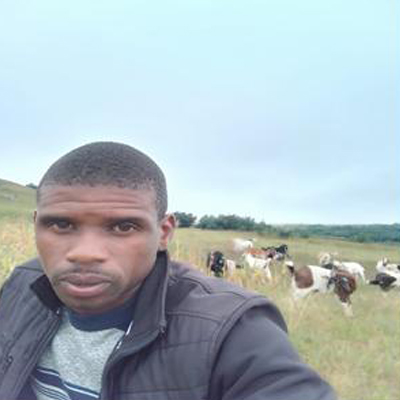 anqoba Nkosi (39) farms in Mpumalanga, where he is producing maize and soybeans and also owns cattle, goats and sheep. He holds a qualification in farm management and joined Grain SA in 2016. Improved yields and consistent participation in the programme have strengthened an operation that this keen farmer hopes to expand to 10 ha.
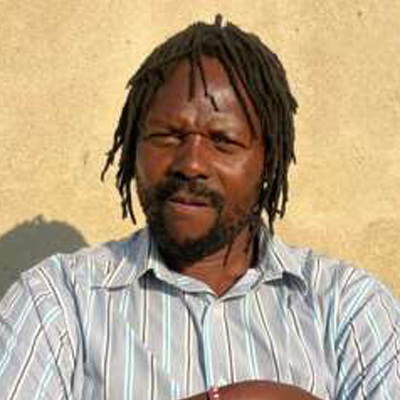 Nkosingiphile Nhlabathi (52) farms in Mpumalanga, where he combines grain production with cattle, goats and chickens. Before joining Grain SA in 2014, he harvested less than 1 t/ha. Through the mentorship of Grain SA and Sizama Impilo Cooperative, he has achieved consistently high-level production, yielding 7 t/ha in the past two seasons.
Publication: September 2026
Section: Pula/Imvula
Author: COMPILED BY THE EDITORIAL TEAM